
Reiki: The Missing Piece in Your Wellness and Longevity Plan

You’re doing the things. You’re eating better, moving your body and implementing all of the latest biohacking modalities.
And yet… something still feels off.
Your body feels tense like you’re wound so tightly that you might break. Your energy isn’t where it should be and your mind doesn’t really shut off, even when you finally sit down at the end of the day.
For a lot of people, this is the moment they start wondering what they’re missing. Because on paper, it looks like you’re doing everything right. So the natural instinct is to assume the answer is doing more— more supplements, a stricter plan, more consistency, more discipline.
But for many, that’s not the issue. The real problem is that the body isn’t operating from a place where it can actually benefit from or respond to those efforts.
The real issue is stress.
Under chronic stress, the nervous system shifts into a more sympathetic, “fight-or-flight” state.
Cortisol patterns can become disrupted, sleep quality declines, digestion isn’t efficient,
hormonal signaling is off and recovery slows down. Ultimately, the body thinks it needs to protect itself instead of rest and repair..
So instead of asking, “What else should I be doing?”, the better question becomes, “How do I get my body into a state where it can actually respond?”
That’s where Reiki comes in.
What is Reiki Anyway?
Reiki is a gentle, non-invasive therapy designed to support the body’s natural ability to regulate and heal.
It was originally developed in Japan by Mikao Usui and is based on the concept that the body responds to subtle shifts in energy and environment—particularly when it comes to stress and nervous system function.
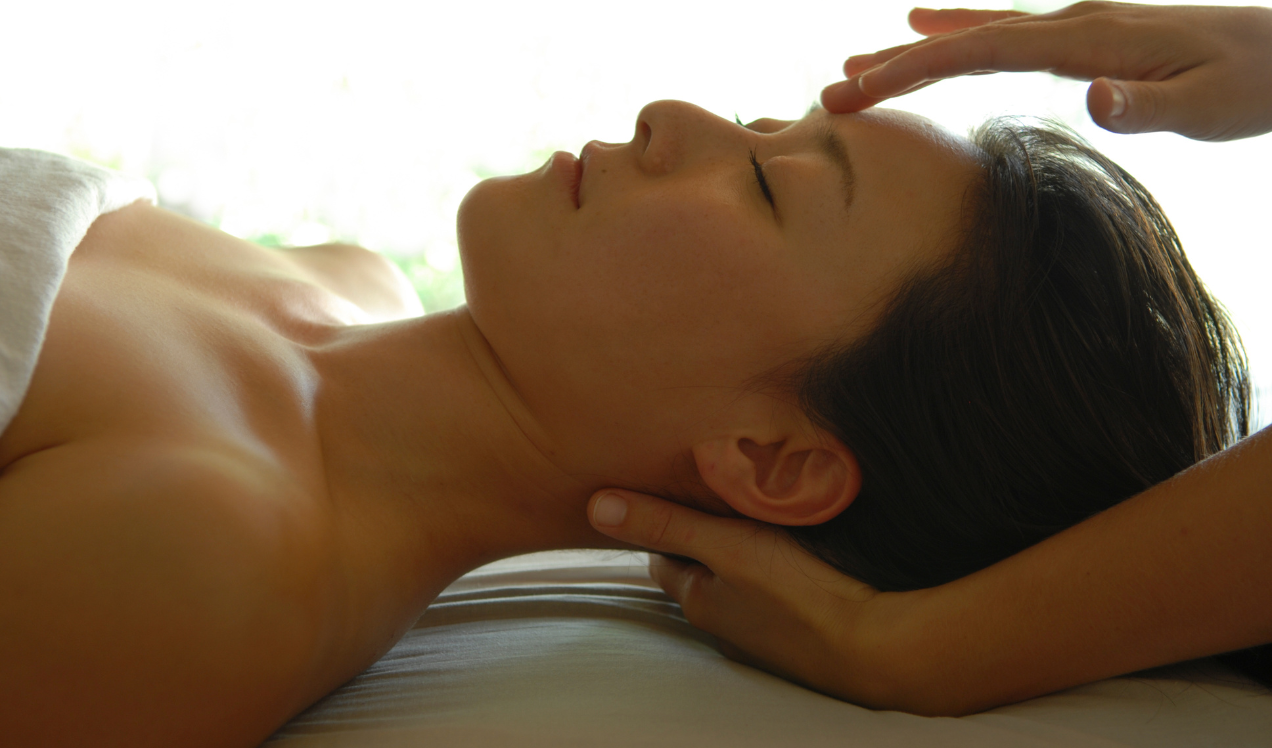
During a session, you remain fully clothed while a practitioner uses light touch or hands positioned just above the body. There’s no manipulation, and nothing being “done” to the body in the traditional sense.
Reiki does not force change, instead, it creates an environment in which the body is more capable of regulating itself. Because when the body is no longer prioritizing survival, it can begin reallocating resources toward repair, recovery, and regulation.
So Reiki isn’t about adding something new, it’s about allowing the body to access a state it’s often missing.
The Nervous System Connection
At the center of all of this is the nervous system. It’s the control system behind how your body responds to stress, how it regulates hormones, how well you sleep, how efficiently you digest food, and how effectively you recover.
When the nervous system is balanced, the body moves between two primary states with ease—a stress response when needed, and recovery when it’s time to repair
But for many people, that flexibility is lost and instead of shifting in and out of the stress response, the body stays in it. This is what’s known as sympathetic dominance—commonly referred to as “fight-or-flight.”
In this state, the body is constantly on alert and is focused on immediate survival, not long-term repair. Over time, this affects multiple systems and cortisol rhythms become dysregulated, sleep becomes lighter and less restorative,digestion slows or becomes inefficient, hormones become imbalance and inflammation and fatigue increase
This is why so many people feel stuck- because even when they’re doing everything right, their body isn’t able to respond the way it should.
Benefits of Reiki for Overall Wellness
Reiki works by helping the body shift out of that chronic stress state and into a parasympathetic or relaxed state—the state where healing, regulation, and recovery actually happen. It doesn’t override the system, it helps restore its ability to regulate.
When that shift happens, the effects show up across multiple systems. This is where people start to notice real changes—not because something is being forced, but because the body is finally able to function the way it’s meant to.
Stress and anxiety reduction
One of the most immediate effects of Reiki is a sense of calm. The constant mental noise starts to quiet, and the body no longer feels like it’s bracing for what’s next.
Sleep and recovery
As the nervous system becomes more regulated through Reiki sessions, sleep often becomes deeper and more restorative. Falling asleep is easier, staying asleep is more consistent, and waking up feels less like a struggle.
Hormonal balance
Chronic stress disrupts hormone signaling. By helping regulate the stress response, Reiki can support more balanced hormonal rhythms.
Stabilized energy
Instead of feeling “tired but wired,” Reiki helps the body establish a more consistent energy baseline while reducing crashes and reliance on stimulants.
Improved digestion
Because digestion relies on a parasympathetic state, Reiki can help improve how the body breaks down and absorbs nutrients.
Emotional regulation and release
Reiki can help the body process stored stress and tension, leading to improved mood, reduced reactivity, and a greater sense of stability.
These benefits aren’t coming from doing more—they’re the result of Reiki helping the body function the way it’s supposed to.
Reiki and Longevity
When most people think about longevity, they think about living longer. True longevity, however, is about how well your body functions over time, how efficiently it repairs, how resilient it is to stress, and how well it maintains homeostasis, or balance across its systems.
One of the biggest threats to that process is chronic stress. With prolonged exposure, a constantly activated stress response increases what’s known as allostatic load—the buildup of stress on the body over time.
This impacts everything from inflammation levels and immune function to hormone regulation, metabolic health and of course, cognitive function. In other words, the longer the body stays in a stress-dominant state, the more it accelerates the aging process.
This is where Reiki becomes relevant in a longevity-focused approach.
Because it supports the body’s ability to shift into a parasympathetic, restorative state, Reiki helps reduce the overall burden of chronic stress on the body. Over time, this can improve resilience to future stressors and promote better balance across the systems most closely tied to aging and long-term health.
It’s not about extending lifespan alone, it’s about creating the internal environment that allows the body to function more efficiently and extend the healthspan as well.
Who Reiki Is For
Reiki is especially beneficial for people who feel like they’re doing everything right, but still aren’t seeing or feeling the results they expect.
It’s for the person who feels constantly on edge—like their body never fully relaxes, even when life seems calm. Those who are mentally exhausted but physically wired, who struggle to shut their mind off at night, or who wake up feeling like they never fully recovered.
For the person dealing with ongoing stress, hormonal imbalances, sleep issues, or inconsistent energy that hasn’t resolved through nutrition, exercise, or supplementation.
And it’s for anyone who feels like they don’t need to do more—they need their body to respond better to what they’re already doing.
At HEAL, we use Reiki as part of a broader approach to support nervous system balance, recovery, and long-term health. If you’ve been feeling stuck despite doing the right things, this may be the missing piece.
